

CCTV surveillance is a popular security tool used to monitor on-site activity at a
business or home. It helps to prevent crime, acts as a deterrent and can aid in post
crime investigation cctv camera, identification of perpetrators and assessing the value of stolen
goods. The technology has evolved significantly from its early days, and the newer
versions are more advanced and sophisticated than ever. They can now record high-
resolution video, have night vision and are compatible with smart devices. They are
also able to monitor a business site even when it is closed and out of working hours,
which can be useful for identifying potential threats or to help thwart any burglary
attempts.
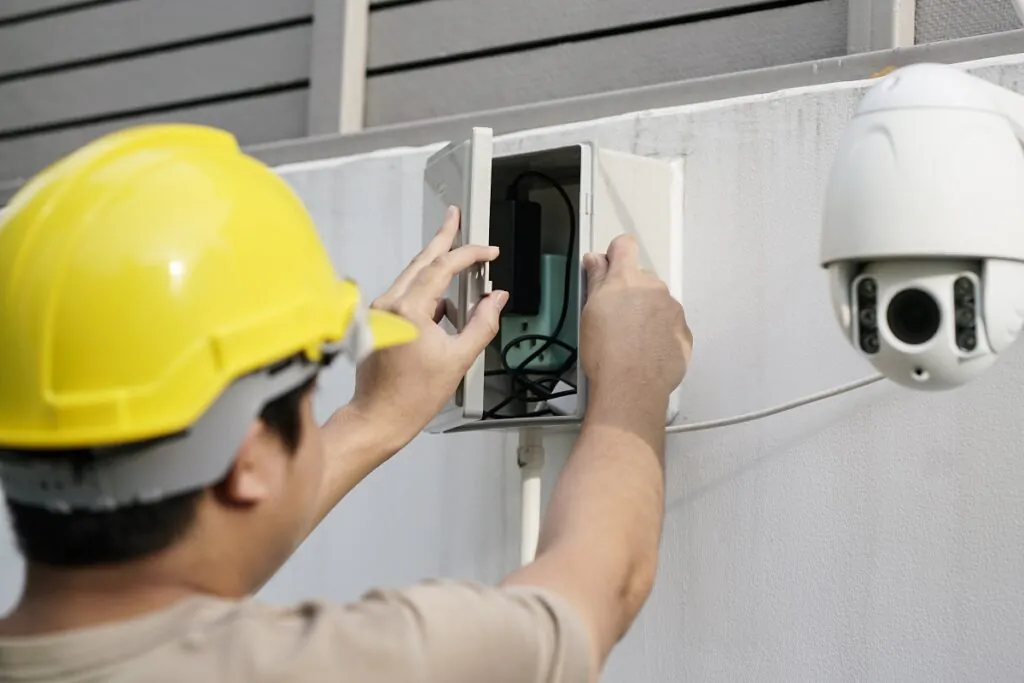
There are two primary types of CCTV systems – analog and digital. Analog systems
use a series of coaxial cables to connect the cameras and transmit continuous video
images. They are cheaper and easier to install cctv installation Singapore, but offer lower image quality. Digital
systems are more expensive, but offer better image quality and a range of features
such as remote monitoring, motion detection, and data encryption.
The traditional CCTV control room is configured with a large array of display screens,
known as a “data wall” (see Figure 1a). The system is usually hard-wired to allow the
feed from each camera to be displayed on a specific screen. A consequence of this is
that a search for a particular scene in the surveillance area can be time-consuming
because operators must manually scan the entire data wall to locate it.
In order to improve this situation, several research projects have attempted to
identify ways of enhancing CCTV search efficiency by allowing the cameras to be
organised into groups that share common semantic characteristics. One such
approach involves using a technique called semantic similarity analysis to
automatically group together scenes with similar characteristics. The resulting
groups could then be searched quickly by an operator by simply clicking on the
relevant section of the data wall. This type of algorithm has been found to be more
effective than manual search, particularly when the underlying semantic structure is
known.
Another way to increase the efficiency of CCTV search is to reduce the number of
scenes that an operator must view simultaneously. This is a challenging task, given
that the average CCTV operator views around 16 different scenes at once. Police
CCTV operators, for example, tend to preferentially monitor a subset of the scenes
that are deemed to be highest risk at any time during the day or night. In addition,
novice participants spontaneously adopt viewing strategies to prioritize certain
scenes during their CCTV surveillance tasks (Hodgetts et al. 2018).
Various interventions have been proposed to support CCTV search efficiency,
including the use of intelligent filters that can reduce the number of images that a
human operator must scroll through, and the use of smart device integration with
CCTV systems, enabling users to access their cameras remotely. Nevertheless,
further technological advancement is needed to fully exploit the potential of CCTV
for improving public safety.